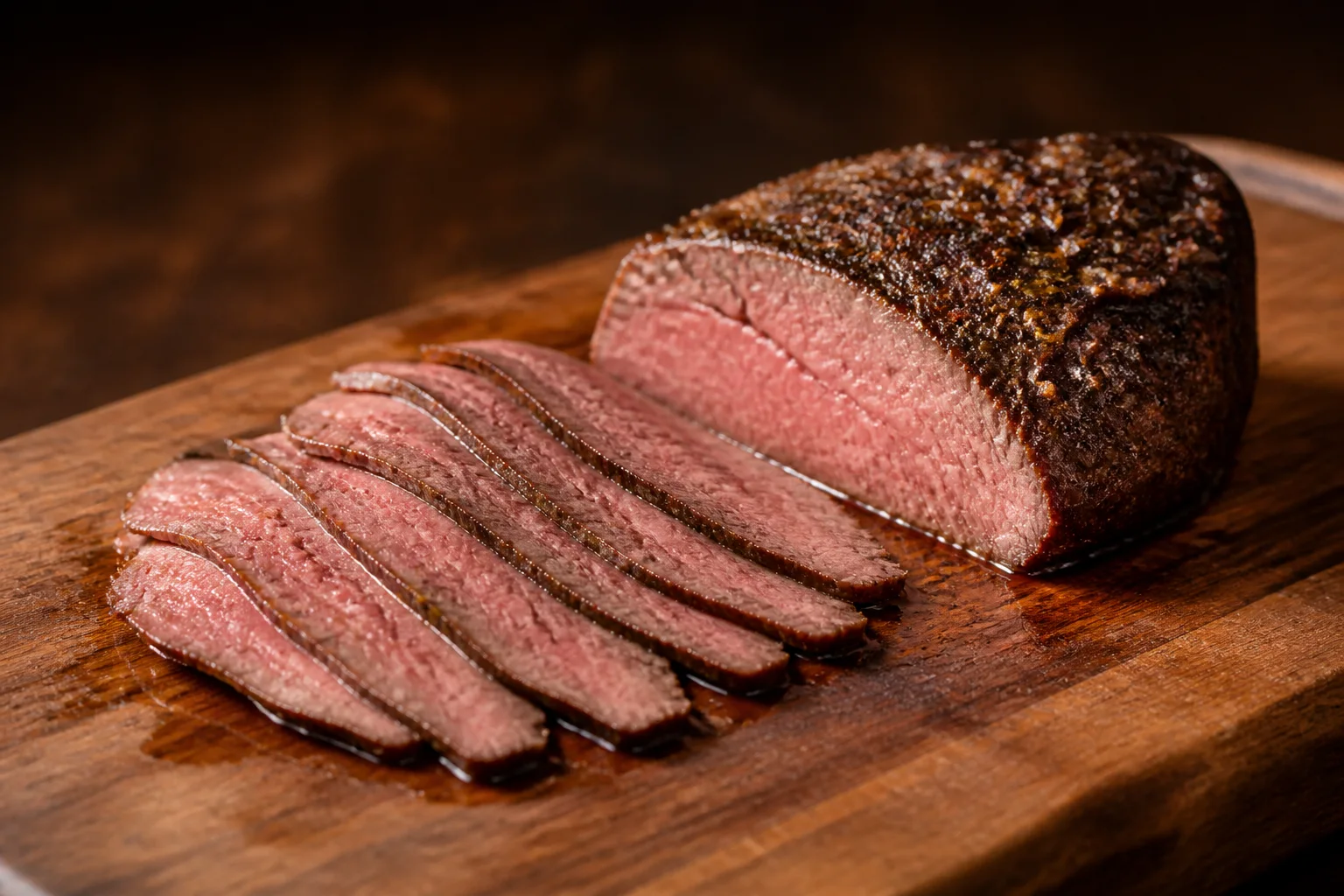
What Is Top Sirloin Steak?
Top Sirloin Steak is a steak from the top sirloin butt, commonly centered on the gluteus medius after the cap and accessory muscles are separated or trimmed. It may also be sold as top butt steak, center-cut top sirloin or boneless sirloin, although regional and retailer terminology is not perfectly consistent. When the name matters, confirm the muscle or ask the butcher how the steak was fabricated rather than relying on a loose menu description.
The cut comes from the top sirloin butt behind the short loin. It is moderately tender and leaner than strip or ribeye, with a clear grain that rewards accurate doneness. The cut has robust beef flavor and enough structure for marinades without needing them to taste complete. Those facts set the useful cooking range: tenderness is not created by a premium label, and strong beef flavor does not guarantee that a steak can be carved with the grain.
A cut guide should answer three practical questions before seasoning begins: how thick is the steak, where does the grain run and how much internal or exterior fat is present? Our complete steak-cut directory gives the larger anatomical map, while this page focuses on the choices that make top sirloin steak work at home.
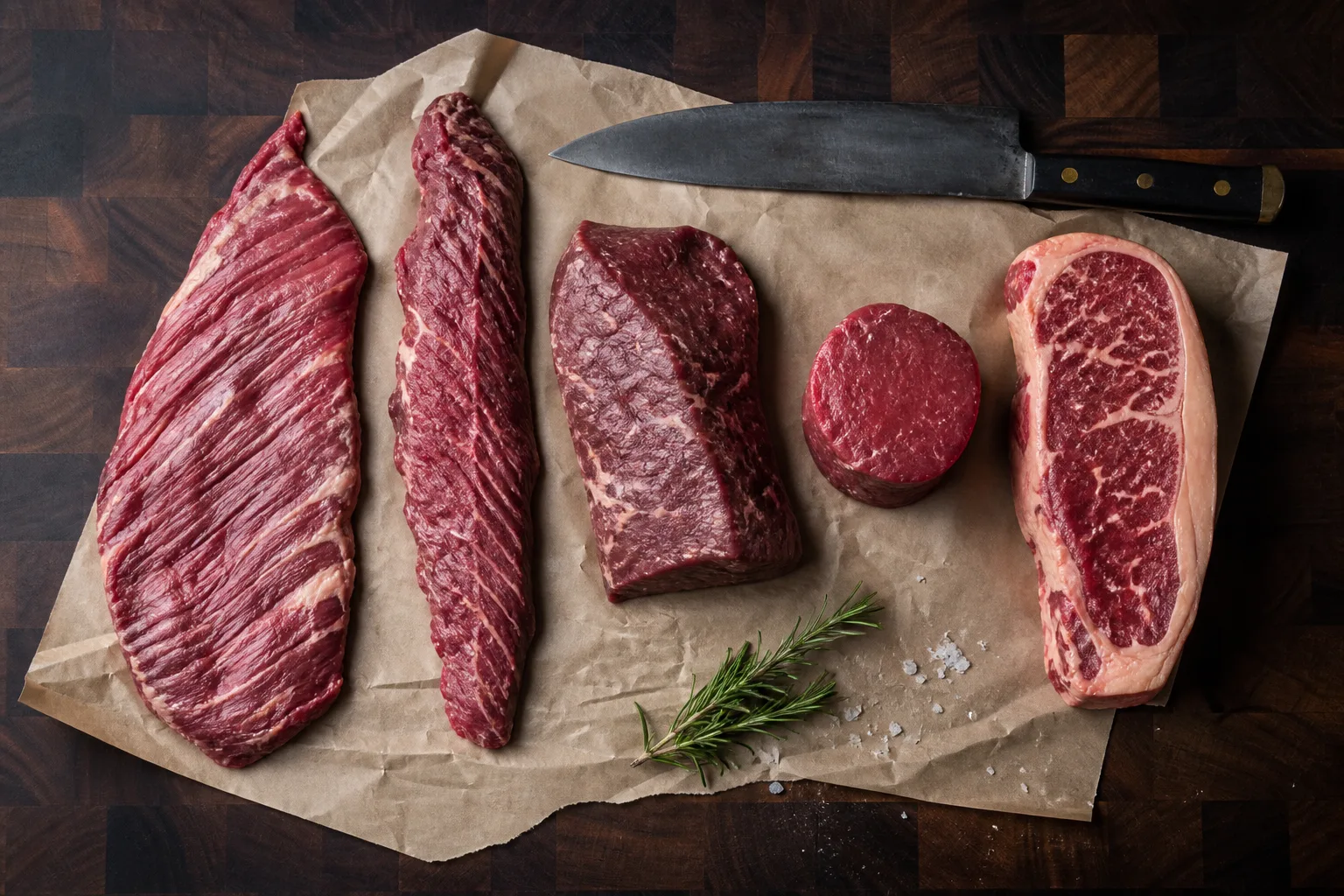
How to Choose Top Sirloin Steak
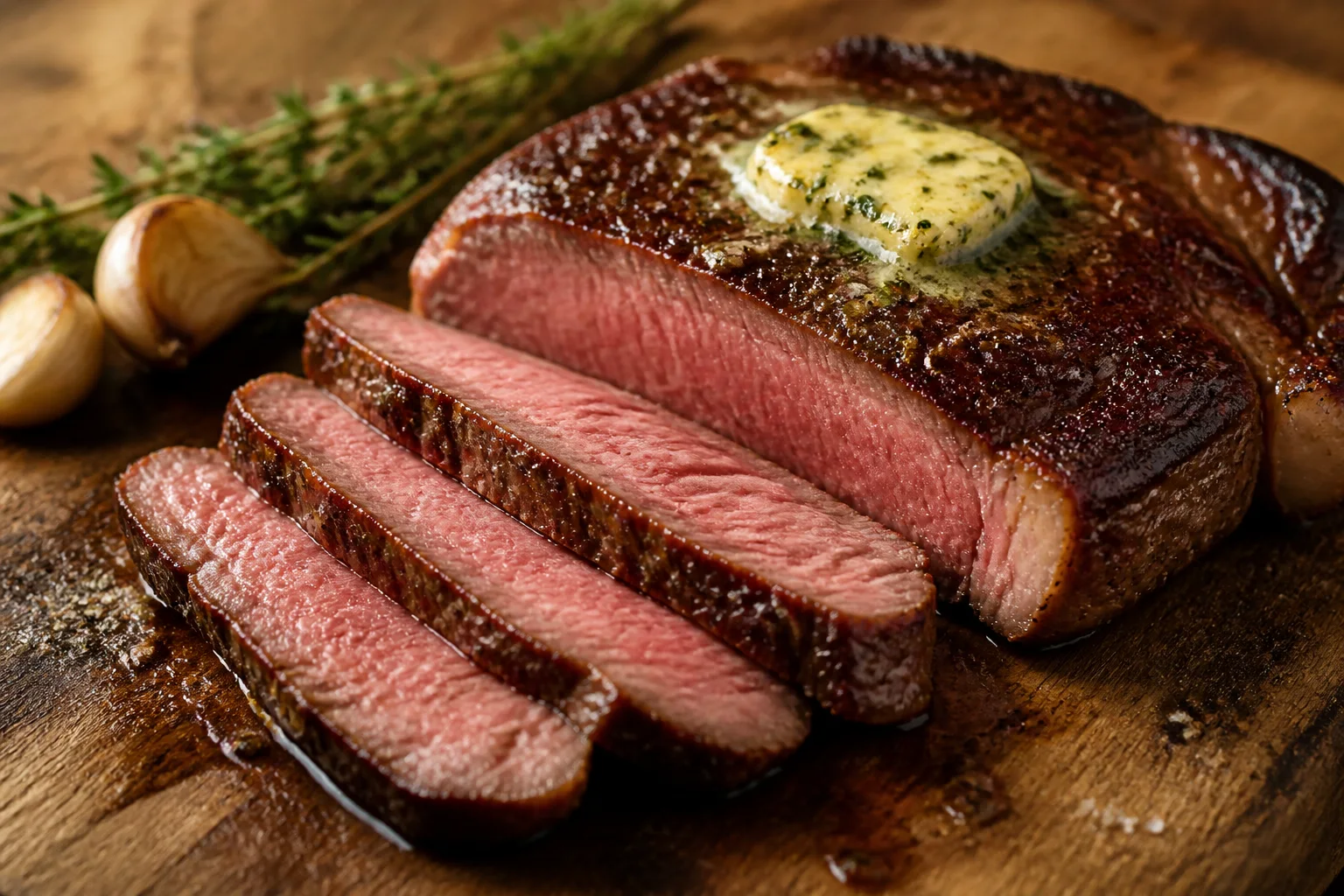
Choose a thick center cut with even shape, modest fine marbling and little hard seam tissue; clarify whether the sirloin cap is included. Color alone is an incomplete freshness test because oxygen exposure and packaging change appearance. Look instead for intact packaging, a properly cold case, a clean cut surface and a use-by or freeze-by plan that fits dinner.
Compare steaks of similar thickness before comparing price per pound. A tapered end, heavy inedible seam or oversized bone can reduce usable portions. For online orders, include required shipping and the seller's stated weight range. A glamour photograph is not a substitute for grade, origin, aging and cut details.
- Confirm the exact cut. Ask whether the label means top sirloin steak as described here or a seller-specific portion name.
- Choose even thickness. Uniform geometry gives the center time to finish before a thin edge dries out.
- Inspect useful fat. Fine intramuscular marbling and a manageable exterior edge are more informative than one large hard seam.
- Plan portions by edible yield. Account for bone, trim and whether the steak will be sliced for a shared dish.
- Ask about mechanical tenderization. Blade- or needle-tenderized beef requires careful handling and should be labeled where regulations require it.
How to Cook Top Sirloin Steak
Start by drying the steak thoroughly. Salt in advance when the schedule allows, then refrigerate uncovered so the surface can dry. Moisture must evaporate before browning accelerates, which is why a dry steak develops crust with less risk to the center. The broader framework in our steak cooking guide applies across appliances.
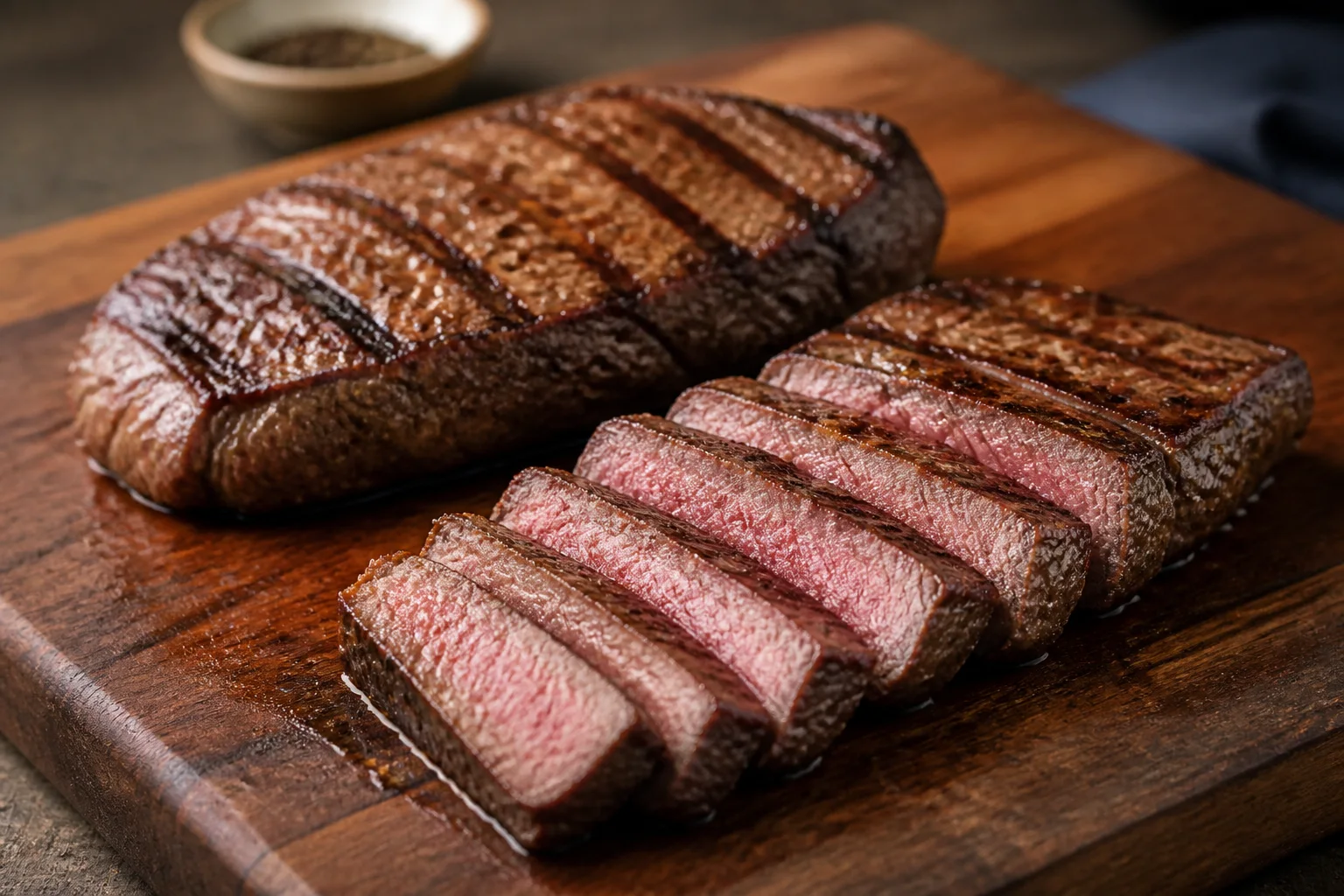
Grill or pan-sear over controlled heat, checking earlier than for a heavily marbled steak because the lean center has less thermal buffer. The most reliable approach is grilled steak; follow the dedicated Grilled Steak guide for heat setup and sequencing. Turn as needed for even browning rather than treating a steak as if it can only be flipped once.
Use an instant-read thermometer from the side and seek the coolest stable point in the lean center. Avoid bone, a fat pocket or the hot surface. Begin checking earlier than a time chart suggests because pan material, starting temperature, steak geometry and actual heat output vary from kitchen to kitchen.
| Steak geometry | Heat strategy | When to start checking |
|---|---|---|
| Under 1 inch | Brief direct heat; skip a long oven stage | After the first strong browning on both sides |
| 1–1½ inches | Controlled pan sear or two-zone grill | Before the crust looks completely finished |
| About 2 inches or more | Gentle heat followed by a hard sear | During the slow stage, then again after searing |
Resting, Grain Direction and Carving
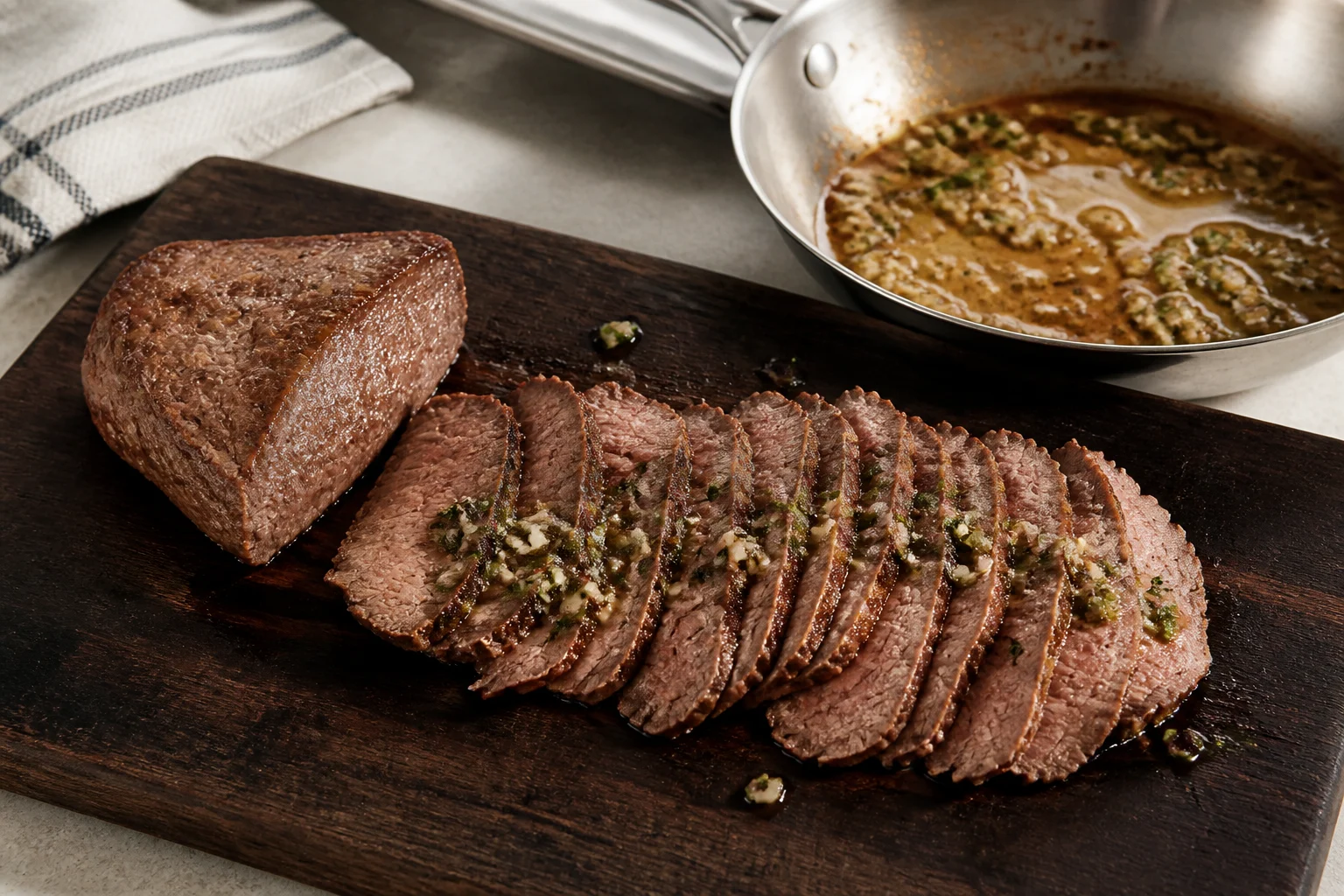
Serve smaller steaks whole or carve across the grain into medium-thin slices for shared plates. Grain direction can change across a large or irregular cut, so divide it into sections when necessary and rotate each piece before slicing. Cutting across the fibers shortens what the diner must chew; cutting with them leaves long, resistant strands even when the center temperature was correct.
Rest on a rack or warm board while carryover heat settles. Resting is not a magic seal, and an hour on the counter only makes the steak cold. The useful interval depends on size: individual steaks need a brief rest, while a large roast-format cut can rest longer before carving. Keep carving juices for a pan sauce or spoon them back over the slices.
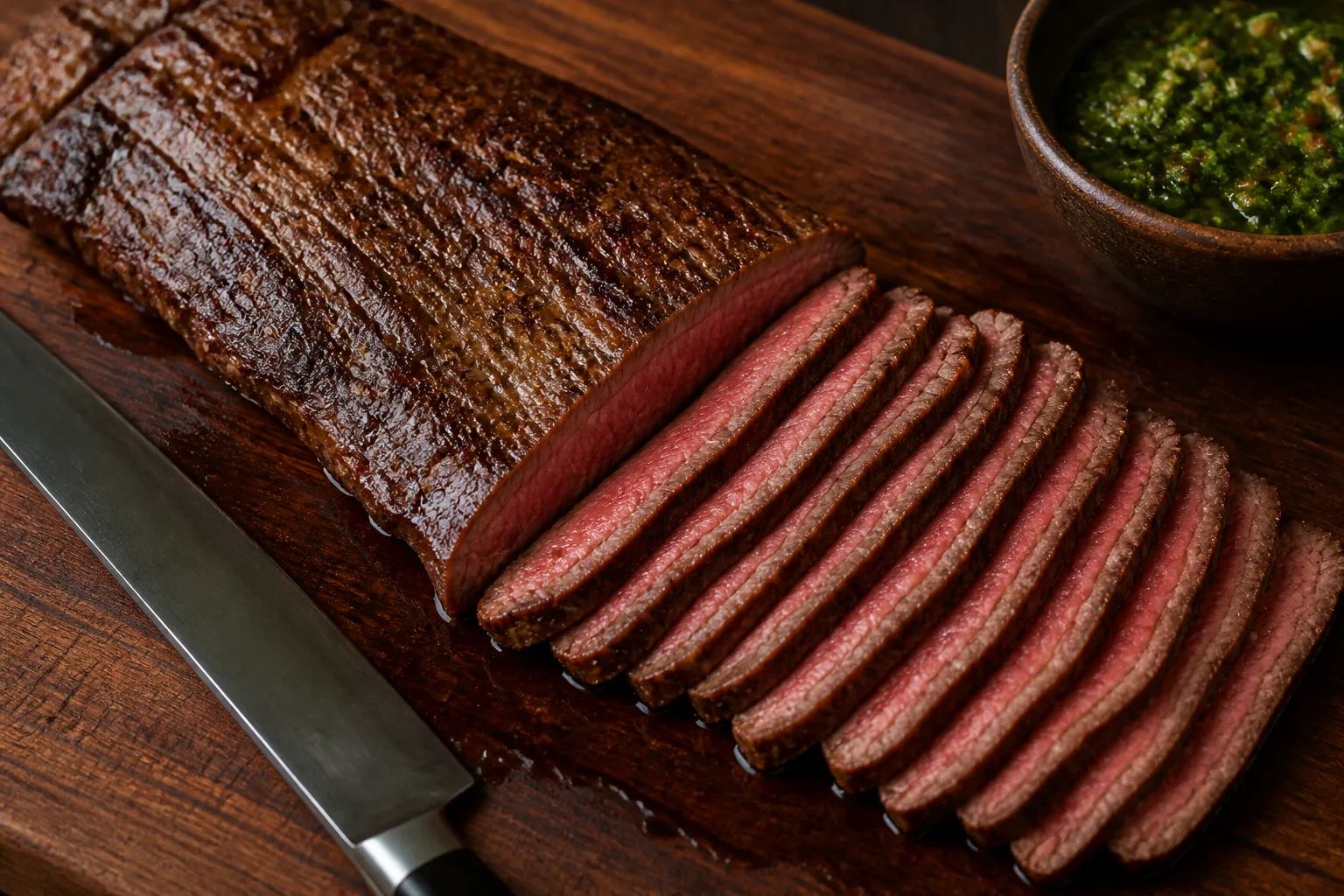
For serving, use it for weeknight steaks, kebabs, salads and sliced dinners where value matters. Add sauce for contrast rather than concealment. Chimichurri, mustard vinaigrette, browned butter or a restrained pan sauce can support beef flavor, but none can reverse overcooking or an incorrect slice.
How Top Sirloin Steak Compares With Similar Cuts
The closest shopping alternatives are Generic sirloin steak, Sirloin tip, New York strip. These are not interchangeable simply because they can share a cooking method. Compare anatomy, grain, fat, thickness and edible yield before substituting.
| Comparison cut | Difference from Top Sirloin Steak | Best decision point |
|---|---|---|
| Generic sirloin steak | May come from several top- or bottom-sirloin portions | Choose by texture, geometry and the final dish |
| Sirloin tip | Round-adjacent knuckle muscles and generally leaner | Choose by texture, geometry and the final dish |
| New York strip | More tender short-loin cut with a defined fat edge | Choose by texture, geometry and the final dish |
If the recipe is built around thin slices, a related cut may work after adjusting cook time and carving. If the goal is a thick steakhouse center, substitution is less forgiving. The name is only the beginning; the actual steak in front of you controls the result.
Common Mistakes to Avoid
- Cooking by minutes alone. Time is a reminder to check, not a measurement of internal doneness.
- Starting with a wet surface. Surface water delays browning and extends the center's exposure to heat.
- Using one heat zone. A cooler zone or lower burner setting gives you somewhere to move the steak before the crust burns.
- Ignoring the grain. Treating every package labeled sirloin as the same muscle or cooking a lean center cut like fatty ribeye.
- Adding butter over maximum heat. Milk solids burn quickly; lower the heat before basting.
- Confusing a label with quality. Breed, grade, aging and production claims answer different questions from cutting accuracy and condition.
Leftovers should be cooled promptly, covered and refrigerated. Reheat gently only until warm, or use thin cold slices in a salad or sandwich. A hard second sear usually pushes a previously cooked center beyond its best texture.
What Center-Cut Sirloin Means
Center-cut sirloin usually refers to a steak fabricated from the central portion of the top sirloin butt after less uniform edge muscles and connective seams are managed. Retail terminology varies, so center-cut should be confirmed as top sirloin rather than treated as a regulated tenderness grade.
Choose even thickness, a clean oval or rectangular shape and fine marbling without a large hard seam through the center. Ask whether the cap is attached and whether the package is mechanically tenderized. Cook a compact center-cut top sirloin with direct heat and measure early because its leaner structure is less forgiving than ribeye.
For neighboring names, compare the sirloin steak family, sirloin tip and ball tip rather than assuming every product labeled sirloin comes from the same muscle.
Prime Sirloin Steak: Grade Does Not Change the Cut
Prime sirloin steak should mean a sirloin cut from beef officially graded USDA Prime. It does not mean prime rib, and it does not establish whether the package contains top sirloin, bottom sirloin, a cap steak or another seller-defined sirloin portion. Read the complete cut name before comparing prices.
A Prime top sirloin can carry more marbling than many Choice examples, yet top sirloin remains leaner and more strongly grained than ribeye. Choose even thickness and fine marbling spread through the eye rather than one exterior fat lump. Cook by geometry and slice across the grain; the grade does not widen the useful doneness window indefinitely.
The Best Way to Cook Top Sirloin Depends on Thickness
Top sirloin is leaner and firmer than ribeye, so efficient browning and an early center check are more useful than a long, aggressive cook. Grilling is the simplest choice for a 1- to 1½-inch steak; pan searing suits a compact portion; reverse searing earns its extra stage only for a genuinely thick filet-shaped piece.
| Top sirloin format | Best starting method | Main risk |
|---|---|---|
| Under 1 inch | Fast pan or direct grill | Drying while chasing a dark crust |
| 1 to 1½ inches | Two-zone grill or controlled cast iron | Leaving it over maximum heat after browning |
| Thick top-sirloin filet | Reverse sear or sear-roast | Assuming weight predicts the center |
| Cap-on piece | Render the cap edge, then use controlled heat | Flare-ups and an unrendered fat band |
- Dry and salt first. Surface moisture delays browning on an already lean cut.
- Use two zones when grilling top sirloin. The cooler side prevents a dark exterior from forcing an underdone center decision.
- Check early. Thin sirloin has less thermal buffer than a thick filet or ribeye.
- Slice across the grain. This improves the bite even when the steak is served as an individual portion.
For a measured skillet dinner, follow the sirloin steak recipe. Do not confuse top sirloin with the leaner round-primal cut in the sirloin tip steak recipe.
Where This Guide Fits
This page supports the broader Sirloin Steak guide. Use that pillar page for the complete cut family, buying framework and links to every closely related article.
Useful next reads include Sirloin Tip Steak, Sirloin Tip Steak Recipe, Sirloin Steak Recipe, Picanha Steak, and Grilled Steak for nearby cuts, methods and decisions.
Frequently Asked Questions
Is Top Sirloin Steak tender?
It is moderately tender and leaner than strip or ribeye, with a clear grain that rewards accurate doneness.
What is the best way to cook Top Sirloin Steak?
Grill or pan-sear over controlled heat, checking earlier than for a heavily marbled steak because the lean center has less thermal buffer. Choose the final method by thickness and use a thermometer rather than a fixed minute count.
Should Top Sirloin Steak be marinated?
A marinade can season the surface and suit strongly grained cuts, but it does not tenderize deeply. Tender steaks usually need only salt, controlled heat and careful doneness.
How should Top Sirloin Steak be sliced?
Serve smaller steaks whole or carve across the grain into medium-thin slices for shared plates.
Sources & further reading
- USDA AMS — Institutional Meat Purchase Specifications, Fresh Beef Series 100 — Federal purchase specifications and standardized beef-cut terminology.
- USDA FSIS — Safe Minimum Internal Temperature Chart — Official whole-steak and ground-beef temperature guidance.
- USDA AMS — Beef Carcass Grades and Standards