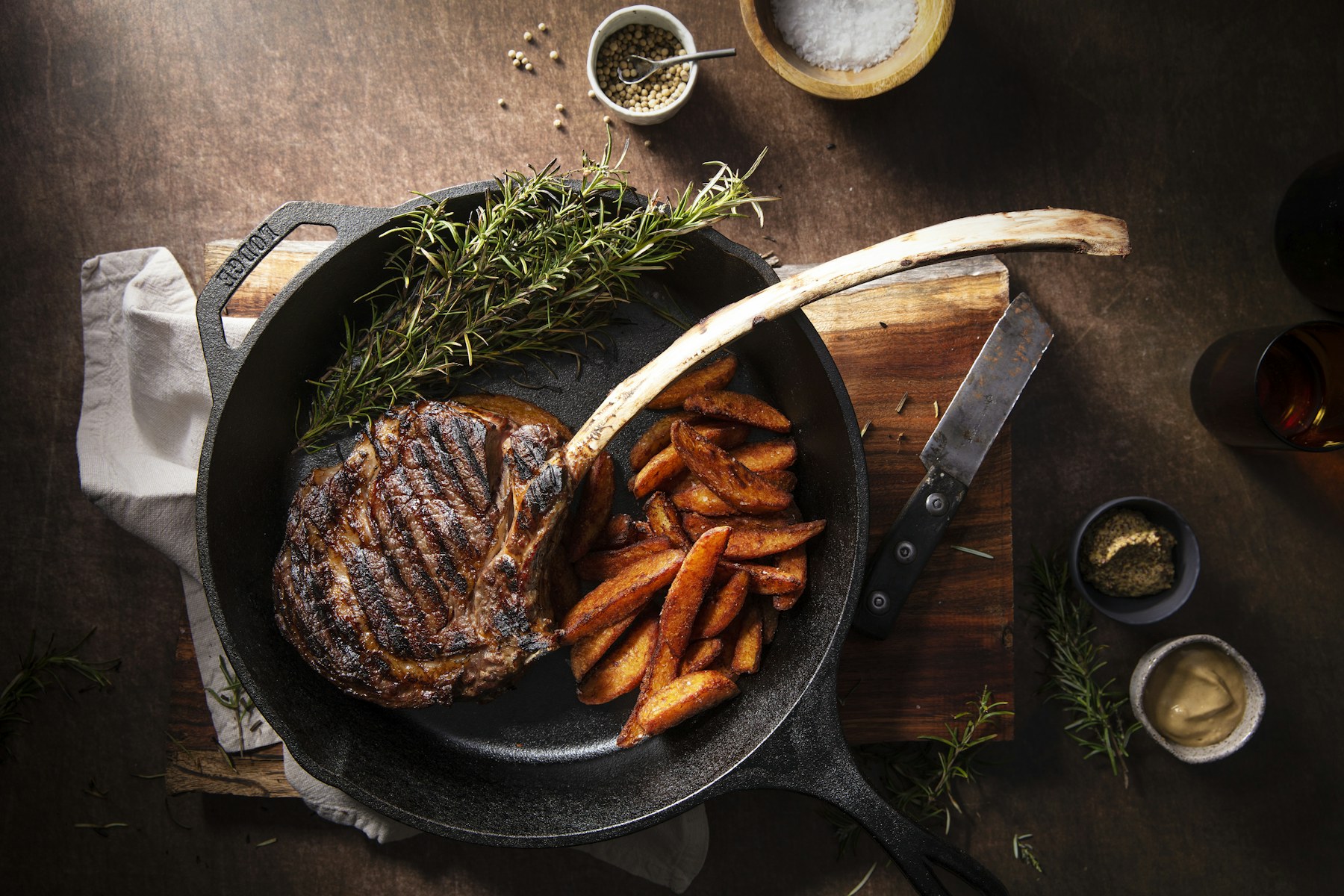
Tomahawk Steak Recipe
A precise reverse-seared tomahawk steak recipe with a dry brine, hard crust, garlic-herb butter and temperature-led instructions.
- Prep
- 20 min
- Cook
- 1 hr 15 min
- Rest
- 15 min
- Total
- 13 hr 50 min
- Serves
- 2
- Yield
- 1 large tomahawk steak
Equipment
- Wire rack and rimmed sheet pan
- Leave-in probe thermometer
- Instant-read thermometer
- Large cast-iron skillet or hot grill
- Tongs
- Carving board and sharp knife
Ingredients
- 1 tomahawk steak, about 2–3 inches thick
- Kosher salt
- 1 tablespoon neutral high-heat oil
- 3 tablespoons unsalted butter, softened
- 1 small garlic clove, finely grated
- 1 tablespoon chopped parsley
- 1 teaspoon thyme leaves
- Freshly ground black pepper, to taste
Instructions
- Dry-brine
Pat the steak dry, salt evenly, and refrigerate uncovered on a rack for 12 to 24 hours.
- Cook gently
Heat the oven to 250°F. Roast the probed steak on its rack until it approaches the desired final temperature, allowing headroom for searing and carryover.
- Make the butter
Combine butter, garlic, parsley and thyme while the steak cooks.
- Sear
Dry the steak again. Sear over very high heat in short turns until deeply browned, including the fat edge.
- Baste and rest
Add garlic butter away from the fiercest heat, baste briefly, then rest for 10 to 15 minutes.
- Carve
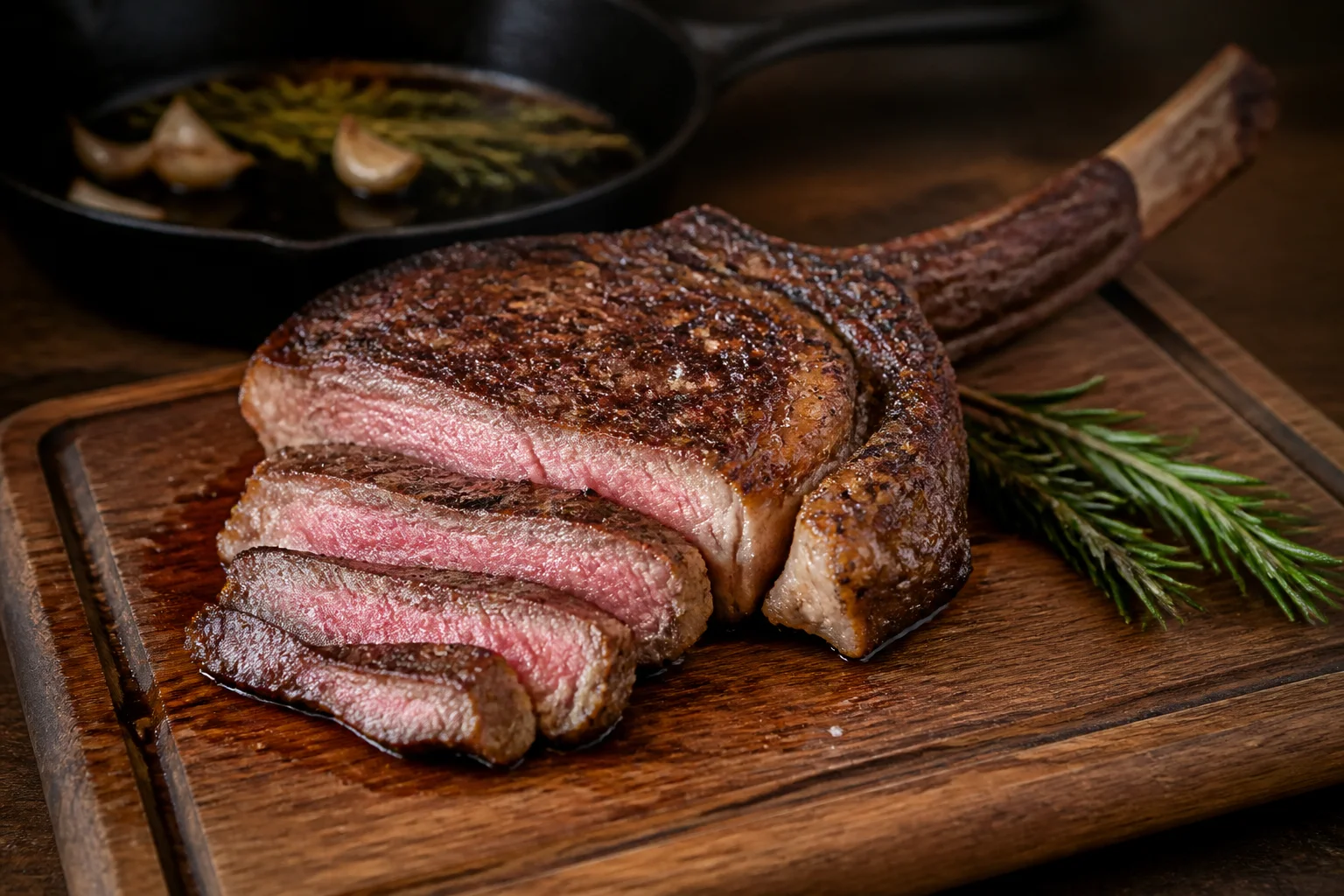
Remove the bone and slice across the grain. Serve with board juices.
Why This Recipe Works
A thick long-bone ribeye is difficult to cook evenly with direct heat alone. The reverse-sear method warms the center slowly and saves the intense heat for a final crust. Read the full tomahawk cooking guide if you need alternate grill and smoker setups.
Garlic butter is added after the harshest heat so the milk solids and garlic do not burn. Keep the seasoning simple enough to taste the ribeye described in the tomahawk cut guide.
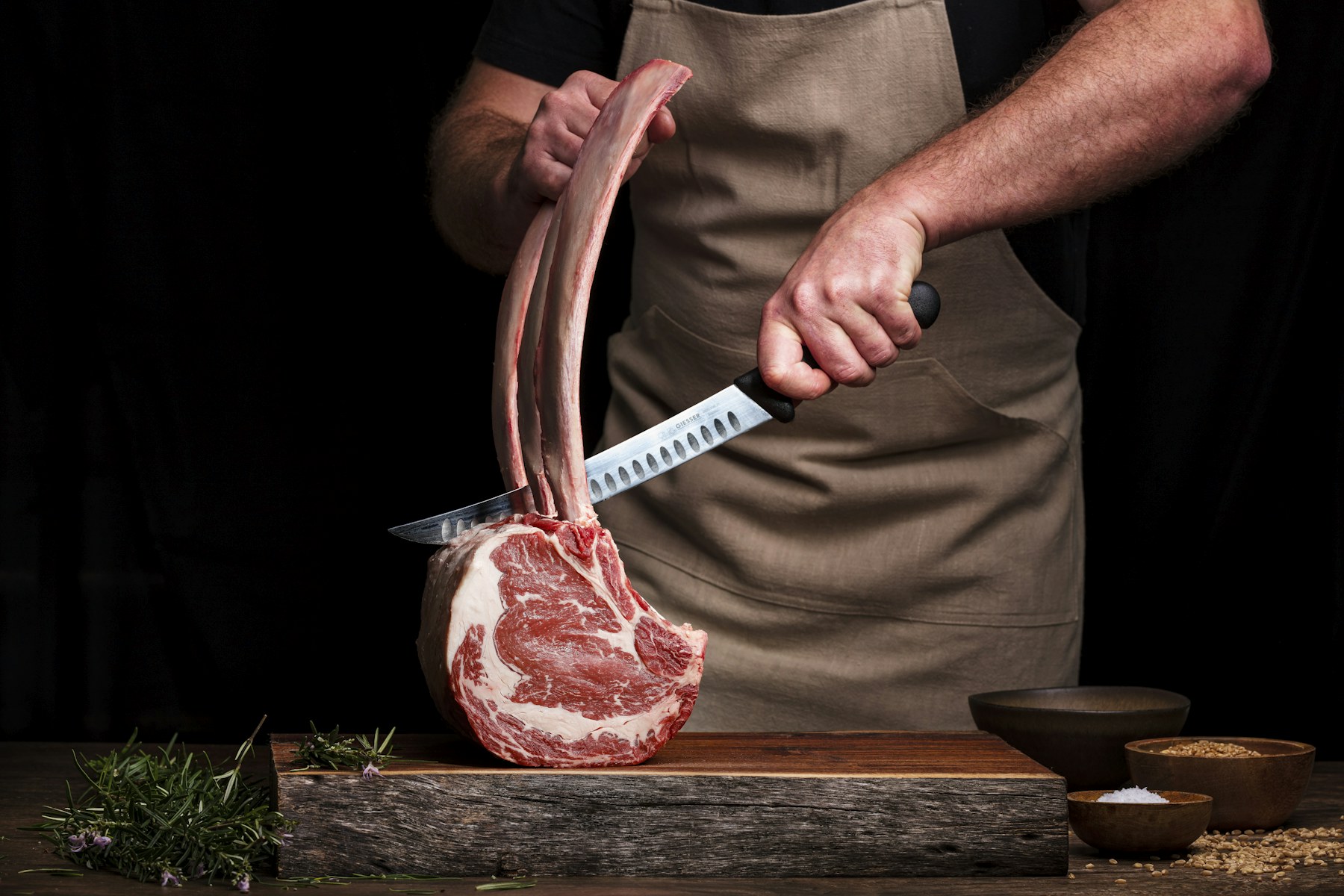
Cook the Steak
- Dry-brine: Pat the steak dry, season all over with kosher salt, and refrigerate uncovered on a rack for 12 to 24 hours.
- Warm the oven: Heat to 250°F. Place the steak on a rack over a rimmed tray and insert a probe from the side into the eye.
- Cook gently: Roast until the center is approaching, but has not reached, your chosen final doneness. Start checking early; do not use the clock as the decision-maker.
- Prepare the finish: Mix softened butter, grated garlic, parsley and thyme. Preheat a heavy skillet or very hot grill.
- Sear: Pat the steak dry again. Add high-heat oil and sear in short turns, including the fat edge, until a deep brown crust develops.
- Butter and rest: Move off fierce heat, add the garlic butter, baste briefly, then rest on a board for 10 to 15 minutes while monitoring carryover.
- Carve: Remove the bone, separate the cap if useful, and slice the meat across the grain.
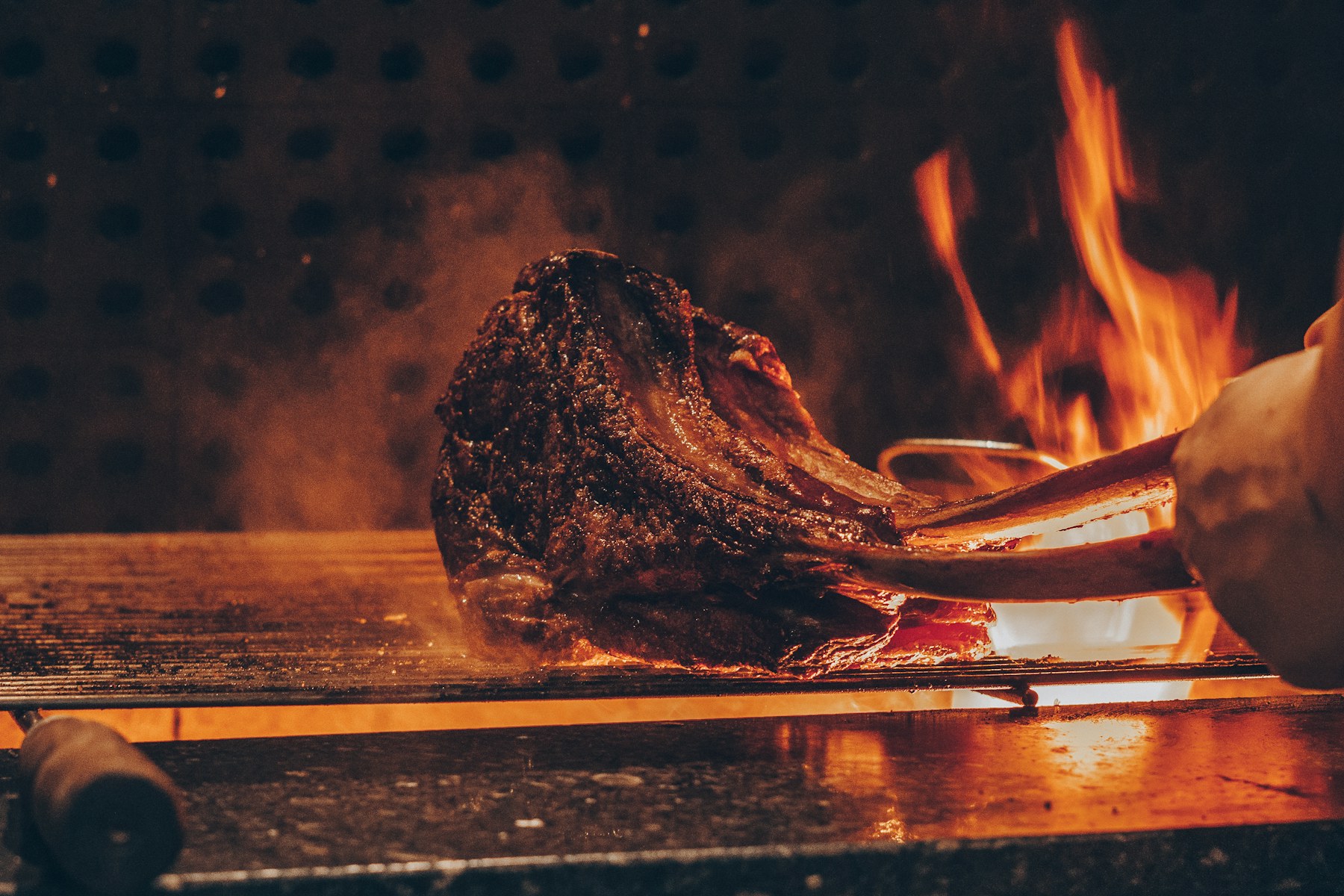
Practical Notes and Substitutions
A shorter cowboy steak works with the same temperature-led approach and is easier to fit in a skillet. If you do not use butter, finish with olive oil, chopped parsley and lemon zest. Avoid sugary rubs during the high-heat sear.
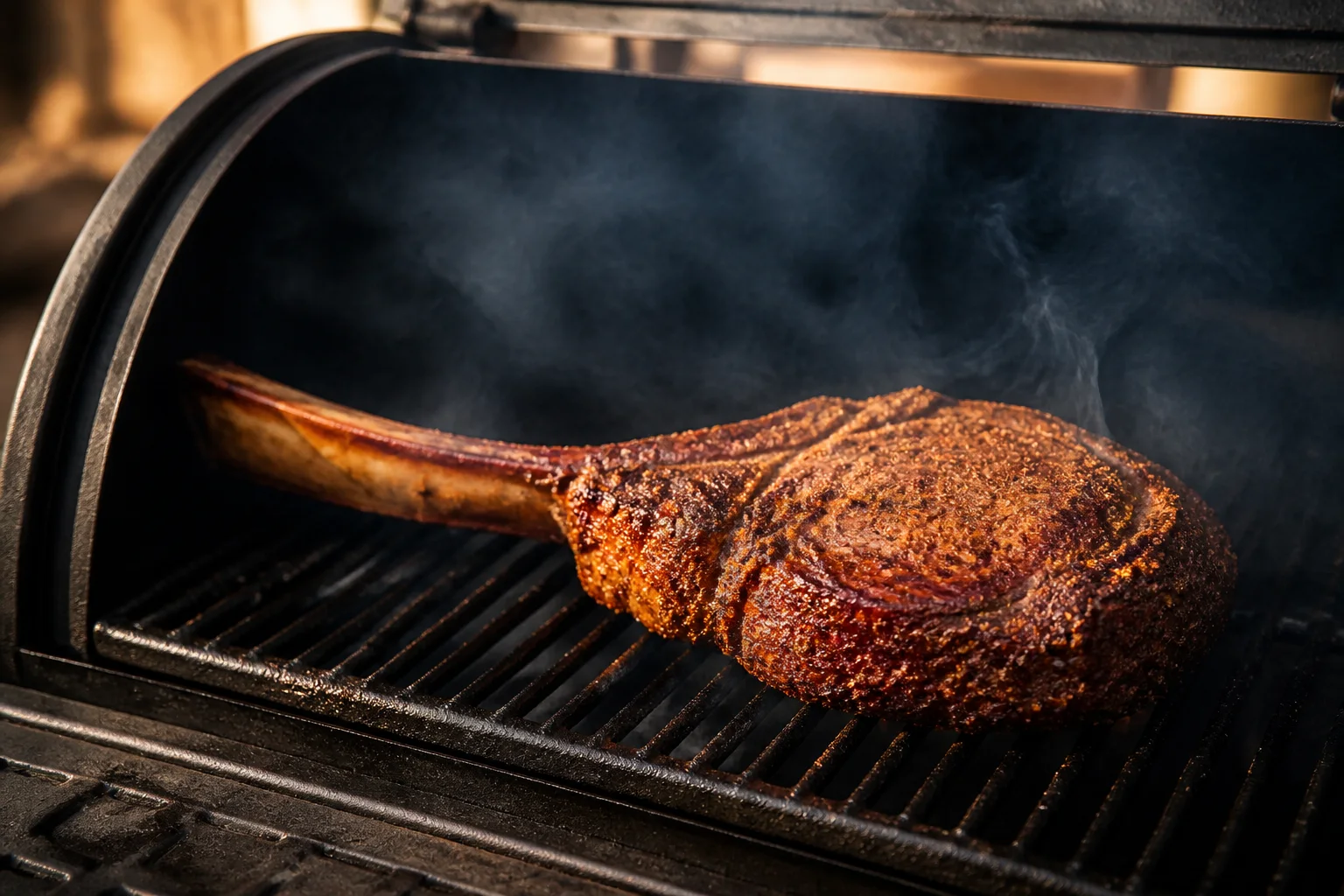
For smoke flavor, do not simply add more wood to this recipe. Use the staged airflow and fuel advice in the smoked tomahawk guide.
Storage and Reheating
Refrigerate leftovers promptly. Keep them in a thick piece rather than pre-slicing everything. Warm gently in a low oven, then refresh the cut surface for seconds in a hot pan. Thin slices also make an excellent cold steak sandwich.
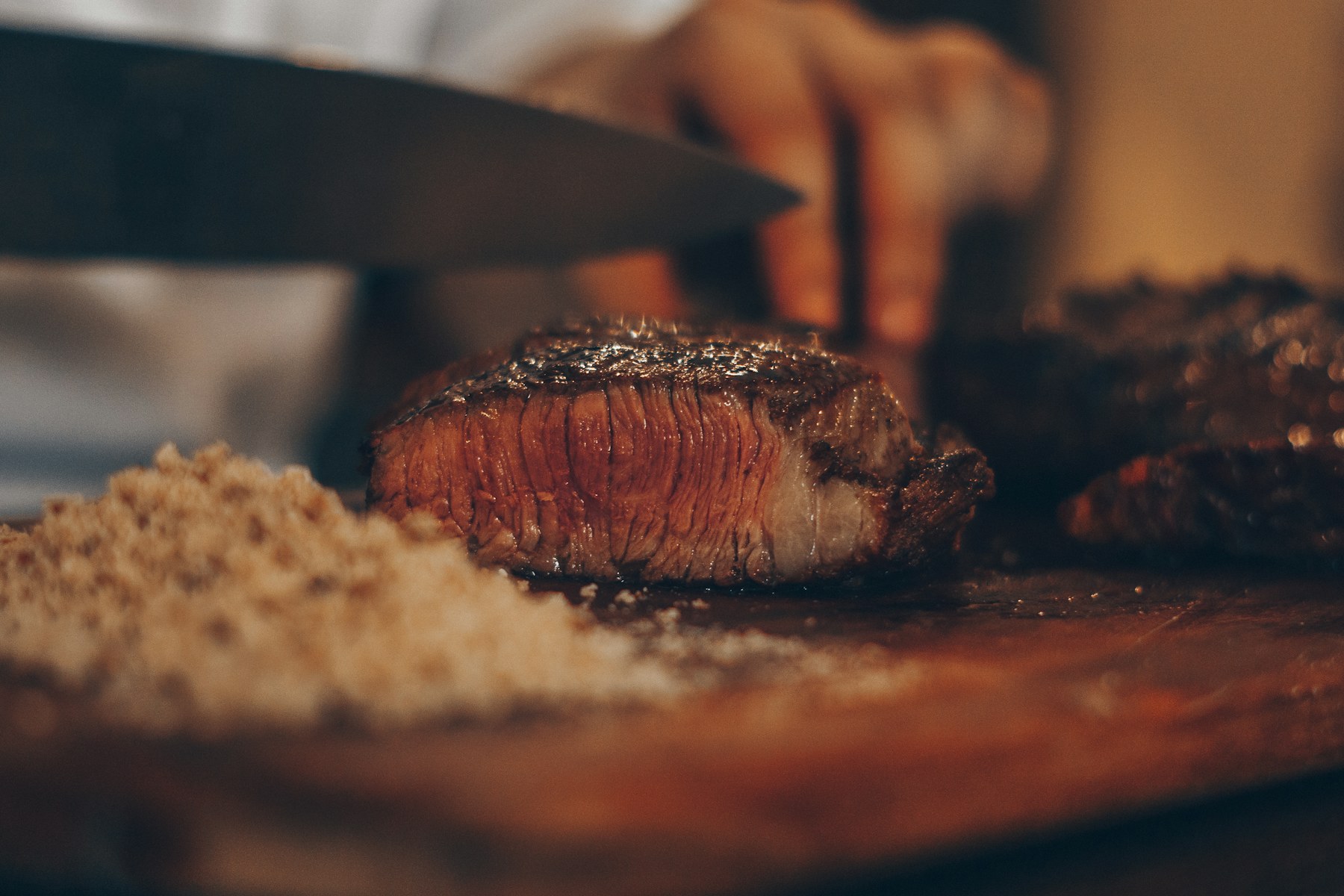
Why Each Ingredient Is Used
Kosher salt seasons the interior during the uncovered rest and helps the surface dry. Neutral high-heat oil fills microscopic gaps during the sear without adding milk solids. Butter, garlic and herbs arrive only after the crust is established, when lower heat can extract aroma without turning the solids black.
Use fresh garlic in large crushed pieces that can be removed quickly. Finely minced garlic burns before a thick steak finishes basting. Thyme is more tolerant than delicate leafy herbs; parsley is best added off heat. If using pepper before cooking, choose a coarse grind and accept a toasted edge, or add it after the sear for a brighter aroma.
| Ingredient | Job | Common mistake |
|---|---|---|
| Kosher salt | Interior seasoning and surface drying | Adding a second full dose through salted butter |
| Neutral oil | Fast heat transfer during sear | Using enough to shallow-fry the steak |
| Butter | Late-stage aroma and basting | Adding it while the pan is still fiercely hot |
| Garlic and herbs | Fragrance, not crust | Leaving small solids against hot iron until bitter |
A Better Timeline Than Minutes Per Pound
The day before, salt the steak and refrigerate it uncovered on a rack. About an hour before the planned meal, organize the thermometer, rack, pan, tongs and butter mixture; the steak does not need a long uncontrolled counter rest. Start the low oven early enough that reaching the handoff temperature does not become a race.
Thickness, starting temperature and oven cycling make exact roasting time unreliable. Begin checking well before you expect the steak to be ready. Once it leaves the low stage, dry the surface again and move directly to the fully preheated searing surface. Rest after the final sear while finishing the salad or warming the platter.
Serve the Recipe Without Hiding the Ribeye
Remove the bone and separate the cap only if the seams make that natural. Slice each muscle across its grain, then arrange the pieces beside the bone. Spoon a restrained amount of garlic butter across a few cut surfaces so diners can still taste the dry-brined crust.
Acidic greens, charred lemon, watercress or a mustard vinaigrette balance the butter and cap fat. For a smoke-driven meal, use the dedicated smoked tomahawk method rather than adding liquid smoke or a heavy barbecue sauce to this recipe.
Where This Guide Fits
This page supports the broader Tomahawk Steak guide. Use that pillar page for the complete cut family, buying framework and links to every closely related article.
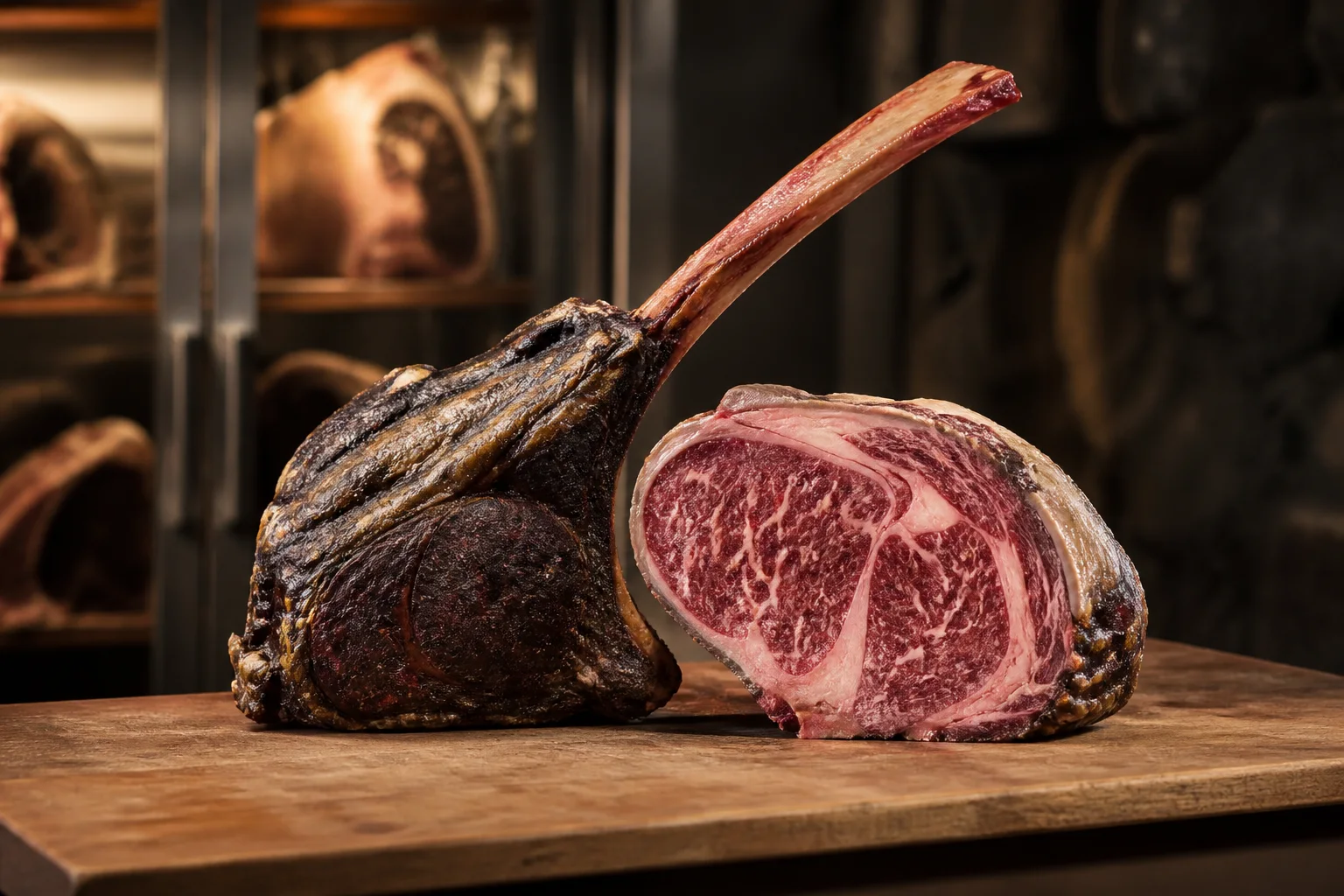
Useful next reads include How to Cook Tomahawk Steak, Smoked Tomahawk Steak, Dry-Aged Tomahawk Steak, Ribeye Steak, and Cowboy Steak for nearby cuts, methods and decisions.
Frequently Asked Questions
Can I make this without a skillet?
Yes. Finish over a very hot direct grill, turning often and moving away from flare-ups.
Can I skip the overnight salt?
Yes. Salt immediately before cooking. Avoid salting for only the 20–40 minutes that lets moisture collect without enough time to be reabsorbed.
Why is no exact roasting time listed?
Tomahawk thickness, weight, bone, starting temperature and ovens vary too much. A thermometer makes the method repeatable.