The Short Answer
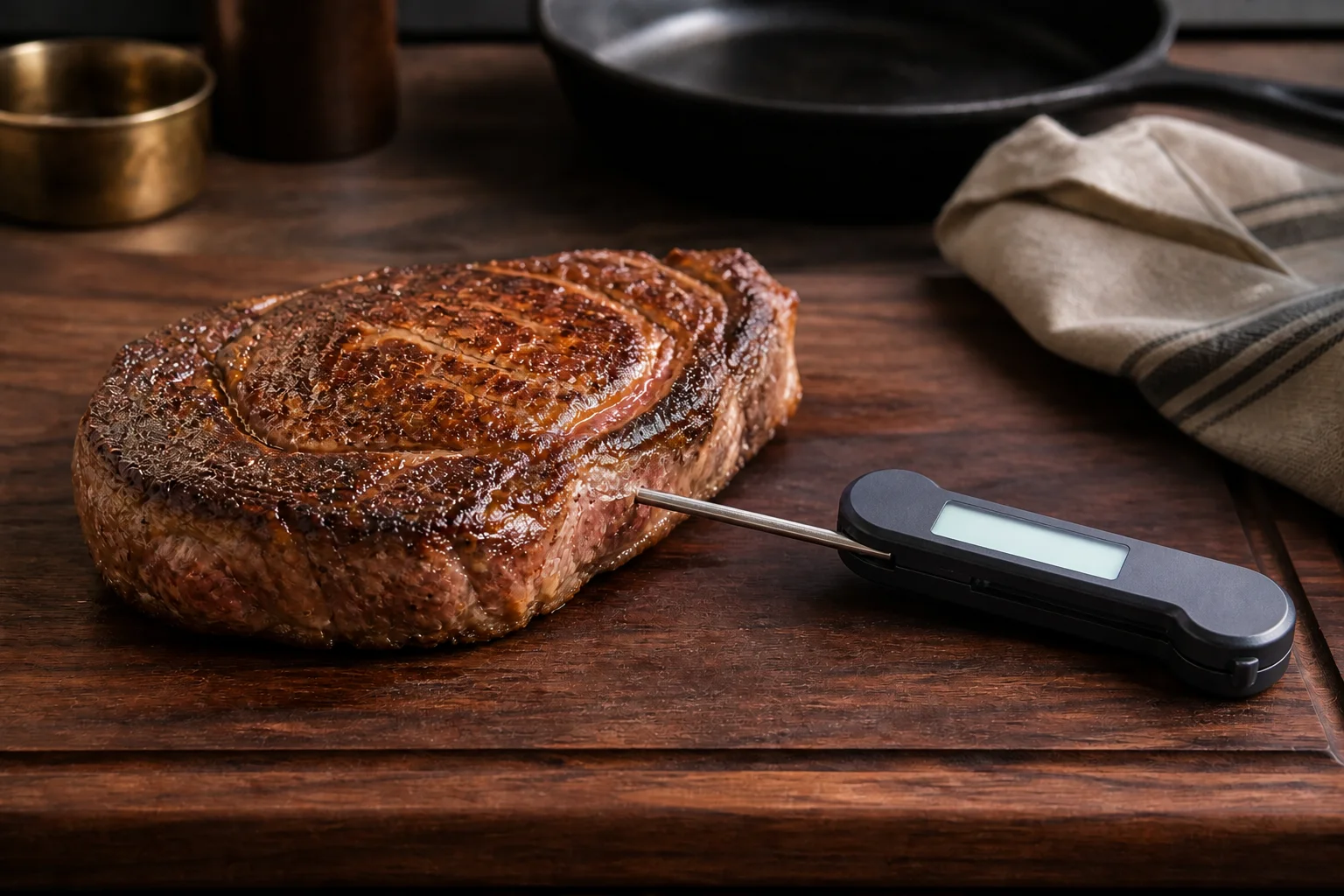
For most people cooking steak, buy a fast folding instant-read thermometer first. It can check several points in a ribeye, map the coolest part of a thick tomahawk and confirm a leave-in probe near the end of a reverse sear. A wireless or wired leave-in thermometer is valuable for long cooks, but it does not replace a final spot check.
Our current specification-based pick is the ThermoWorks Thermapen ONE. Its published one-second response, ±0.5°F accuracy across the range that contains steak temperatures, slim tip, rotating display, IP67 rating and five-year warranty form the strongest steak-focused package we found. Food Network's 2026 testing also selected it as best overall after steak, ice-water and boiling-water checks.
Our Top Specification Match for Steak
The premium is easiest to justify for cooks who buy thick or expensive steaks, grill frequently or need one thermometer for more than steak. Someone cooking occasionally can still get a useful result from a slower budget model if its accuracy is documented and the sensing area is small enough to locate the center.
What Actually Matters for Steak
| Feature | Why it matters | Useful target |
|---|---|---|
| Response time | A steak and hot pan keep changing while the display settles | About 1–3 seconds for convenient spot checks |
| Accuracy specification | A stable wrong number is still wrong | A stated tolerance near normal cooking temperatures |
| Sensing area | The center of a thin steak is a small target | A fine tip with the sensor close to the end |
| Display | Grill shadows and awkward angles make small screens difficult | Backlight and orientation that remain readable in either hand |
| Water resistance | Grease, rinsing and outdoor cooking are normal | A documented ingress-protection rating rather than vague splash claims |
| Warranty and calibration support | Thermometers drift, break or need verification | Clear support, published instructions and a meaningful warranty |
Display resolution is not the same as accuracy. A screen can show tenths of a degree while the underlying instrument has a much wider tolerance. Look for a manufacturer that publishes the actual accuracy range, response time and sensor type. A traceable calibration certificate adds evidence about the instrument when it leaves the factory; it does not eliminate the need to notice damage or implausible readings later.
Instant-Read vs Leave-In: Which One Do You Need?
An instant-read thermometer is inserted, read and removed. It is the better first purchase for pan-seared steak, burgers, thin cuts and final verification. It can sample several positions, which matters because bone, fat seams, steak shape and uneven cooker heat create different temperatures inside one piece of beef.
A leave-in probe stays in the steak during an oven, smoker or indirect-grill stage. It shows the temperature trend and warns when a thick cut approaches the handoff point. That makes it useful for reverse-seared steak, a smoked steak or a large tomahawk. Probe placement can still miss the coolest center, so verify with an instant-read thermometer before the final sear or service.
| Cooking situation | First choice | Reason |
|---|---|---|
| Fast cast-iron steak | Instant-read | Quick checks without leaving a cable near the pan |
| Thin flank, skirt or bavette | Instant-read | A fine side-entry tip can target the narrow center |
| Thick reverse sear | Leave-in plus instant-read | Trend monitoring first, center verification second |
| Smoker or indirect grill | Leave-in plus instant-read | Remote progress with a final multi-point check |
| Several steaks at once | Instant-read | One tool can compare every steak and hot spot |
Premium Pick vs a Sensible Budget Alternative
ThermoWorks publishes a two-to-three-second response and ±1°F accuracy from 14°F to 208°F for the shorter-probe ThermoPop 2. Those figures are slower and less precise than the Thermapen ONE's published specification, but they still cover the practical center-temperature range for steak. The budget model uses a fixed straight body instead of a folding probe and carries a shorter warranty.
That makes the choice less dramatic than many affiliate roundups suggest. Buy the premium model for faster scanning, stronger environmental protection, a folding form and longer warranty. Buy a documented budget instrument when cost matters more than shaving a second or two from each reading. Avoid anonymous models whose listings promise 'instant' performance without a meaningful response-time or accuracy specification.
A wireless probe is not automatically an upgrade for every steak. It adds value when you need continuous monitoring, multiple probes or distance from a smoker. For a ten-minute pan cook, setup, connectivity and a thick permanent probe can be less useful than one dependable instant reading.
How to Use a Meat Thermometer in Steak
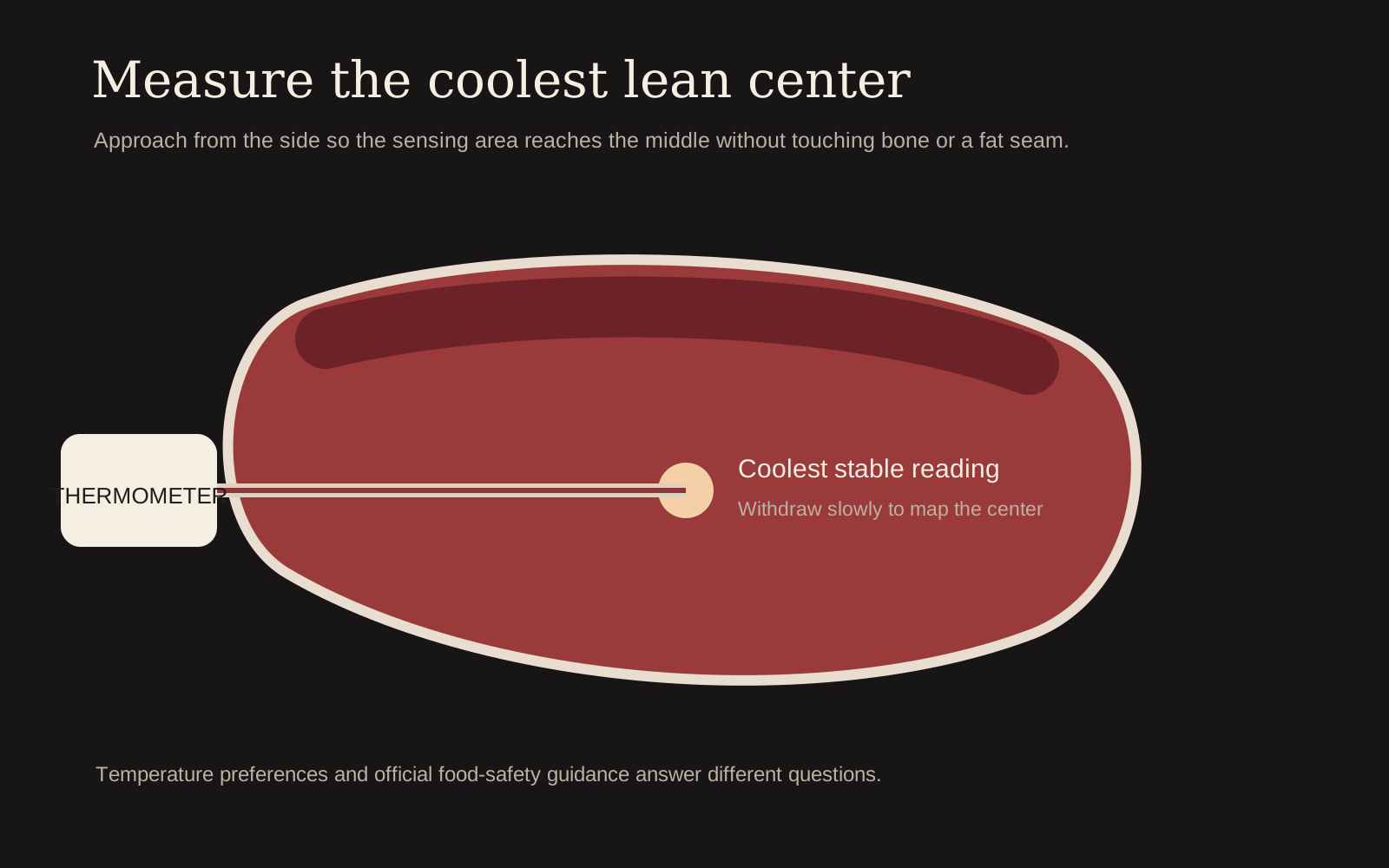
- Insert from the side so more of the probe travels through the steak's central plane.
- Aim for the thickest lean area and keep the sensing tip away from bone, large fat seams, the pan and the grate.
- Move slightly through the center and use the coolest stable reading rather than the first number shown.
- Check both muscles of a porterhouse because strip and tenderloin do not finish together.
- Begin checking before the estimated finish, then account for the heat added by searing and resting.
- Clean and dry the probe before and after it contacts food, following the manufacturer's instructions.
Use the steak temperature guide to separate common culinary doneness language from official safety guidance. The cooking-time calculator can estimate when to start checking, but the thermometer measures what the timer cannot.
Buying and Measuring Mistakes
- Choosing the model with the most app features before checking accuracy and response time.
- Treating display resolution as proof of measurement accuracy.
- Buying an infrared thermometer for the center of steak; infrared measures surface temperature.
- Leaving an instant-read probe in the oven or grill when the manufacturer does not permit it.
- Taking one top-down reading that can pass through the center too quickly or stop near the hot surface.
- Touching bone or cookware and then blaming the thermometer for an implausible number.
Verdict
The Thermapen ONE is our best current specification match for steak because it combines a one-second published response, tight published accuracy, a small folding probe, easy display orientation, strong ingress protection and a five-year warranty. Its main weakness is price, not suitability.
A documented budget instant-read thermometer is enough for many cooks, and a leave-in probe becomes the logical second purchase for long low-heat stages. Whichever model you choose, measurement technique matters more than a badge on the handle: enter from the side, avoid bone and fat, find the coolest center and verify more than one point.
Two Exact Instant-Read Alternatives
These are specification matches, not unreported tests. The TP19H is the lower-cost folding option; the Javelin PRO Duo is the faster published-response alternative with a large ambidextrous display. Verify the current seller, warranty and specifications before ordering.
Need another size or budget? Use the broad comparison below only after applying the response-time, accuracy and probe-design criteria in this guide.
Build the Rest of the Steak Toolkit Deliberately
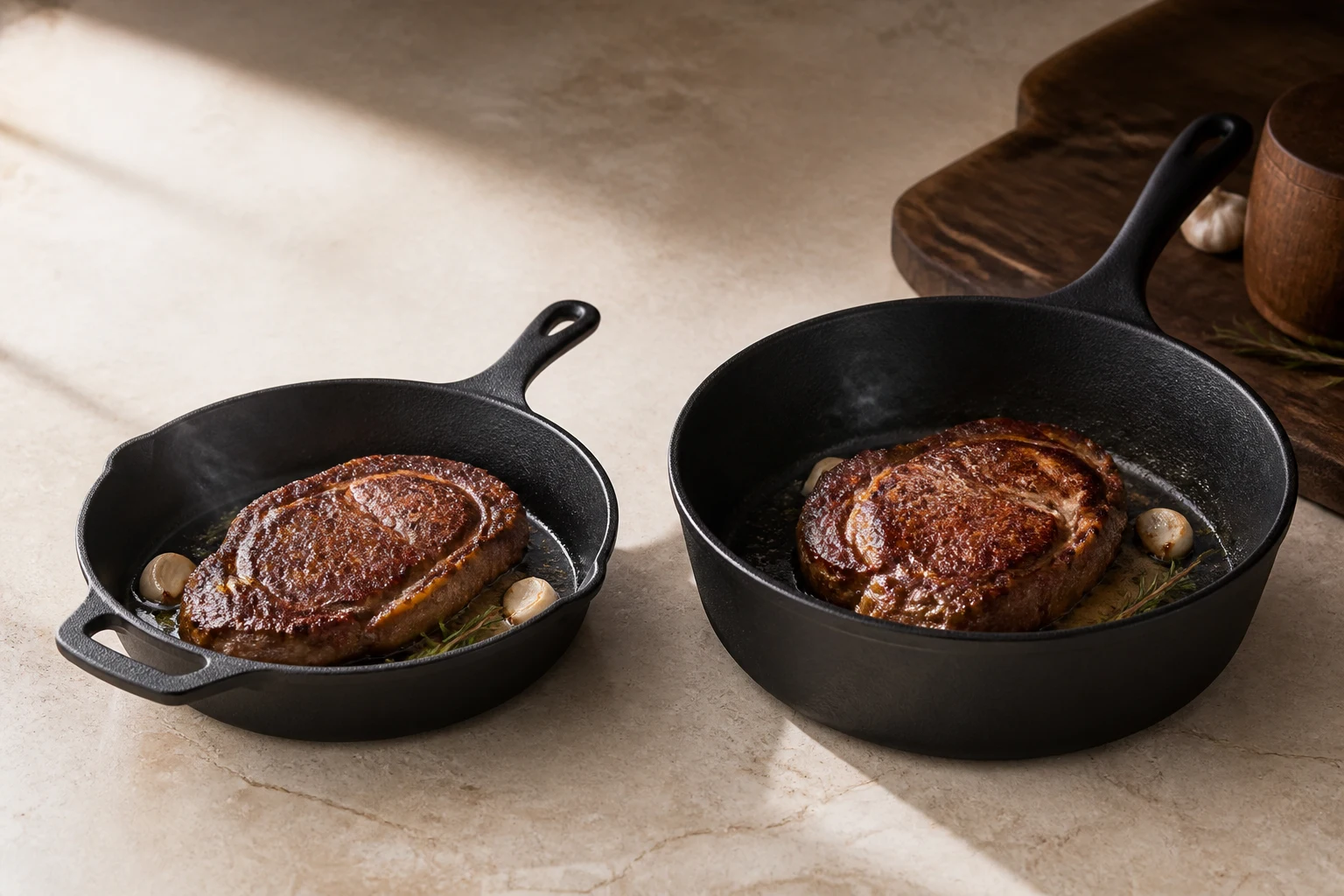
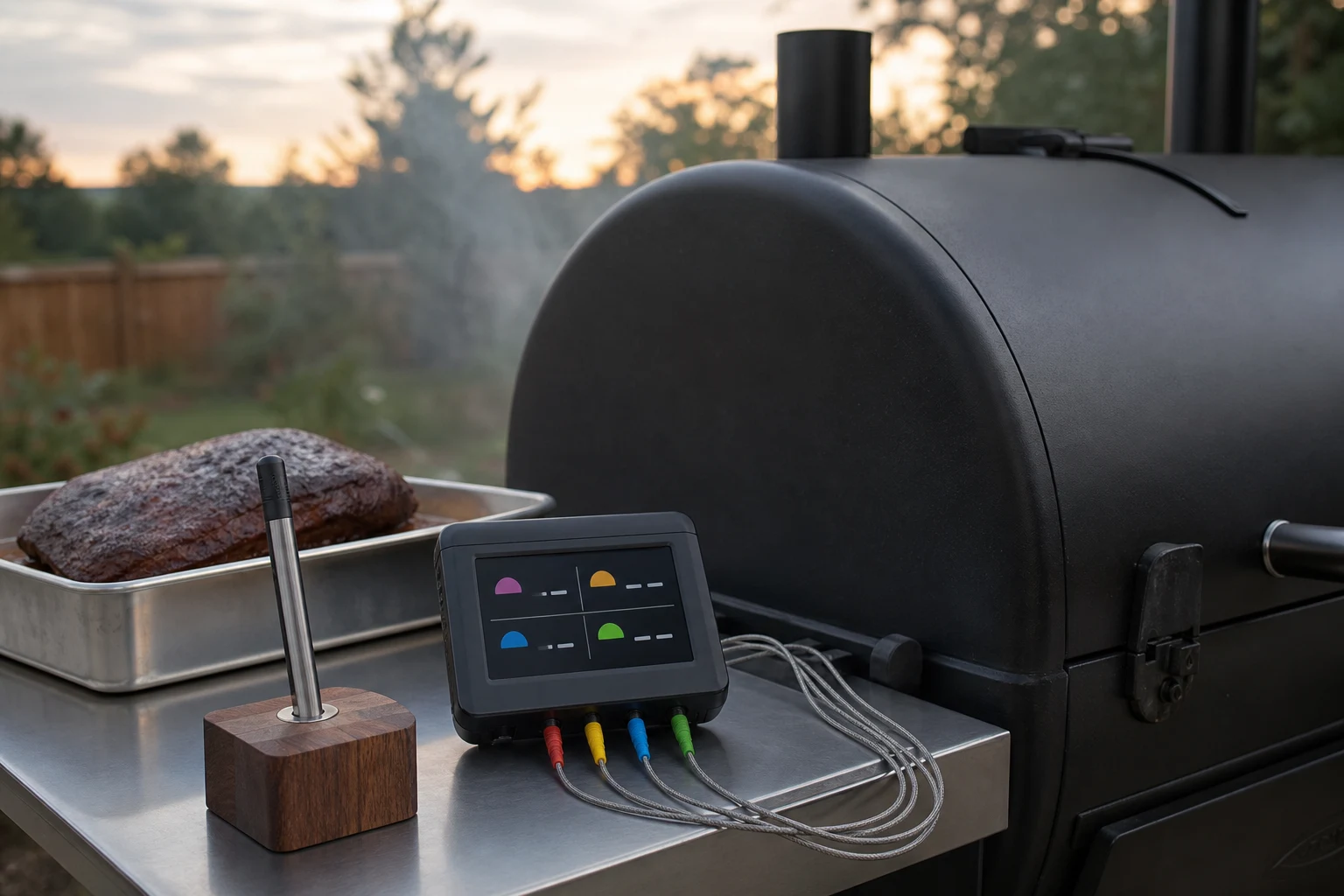
Once temperature measurement is covered, choose equipment for the cooking method rather than collecting a generic tool set. Compare the exact options in our cast-iron skillet guide for indoor searing or the smoker thermometer guide when the probe must remain in the cooker.
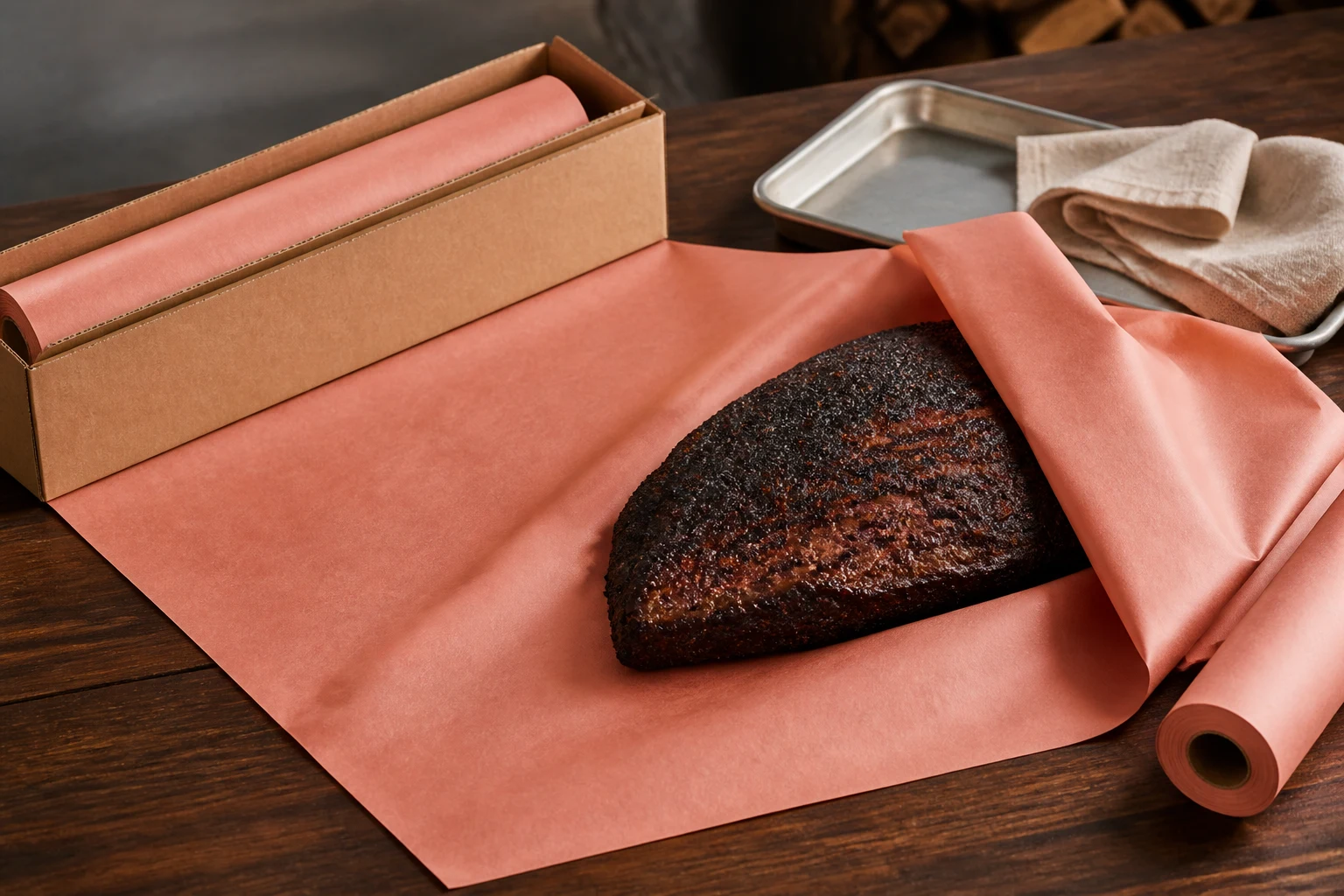
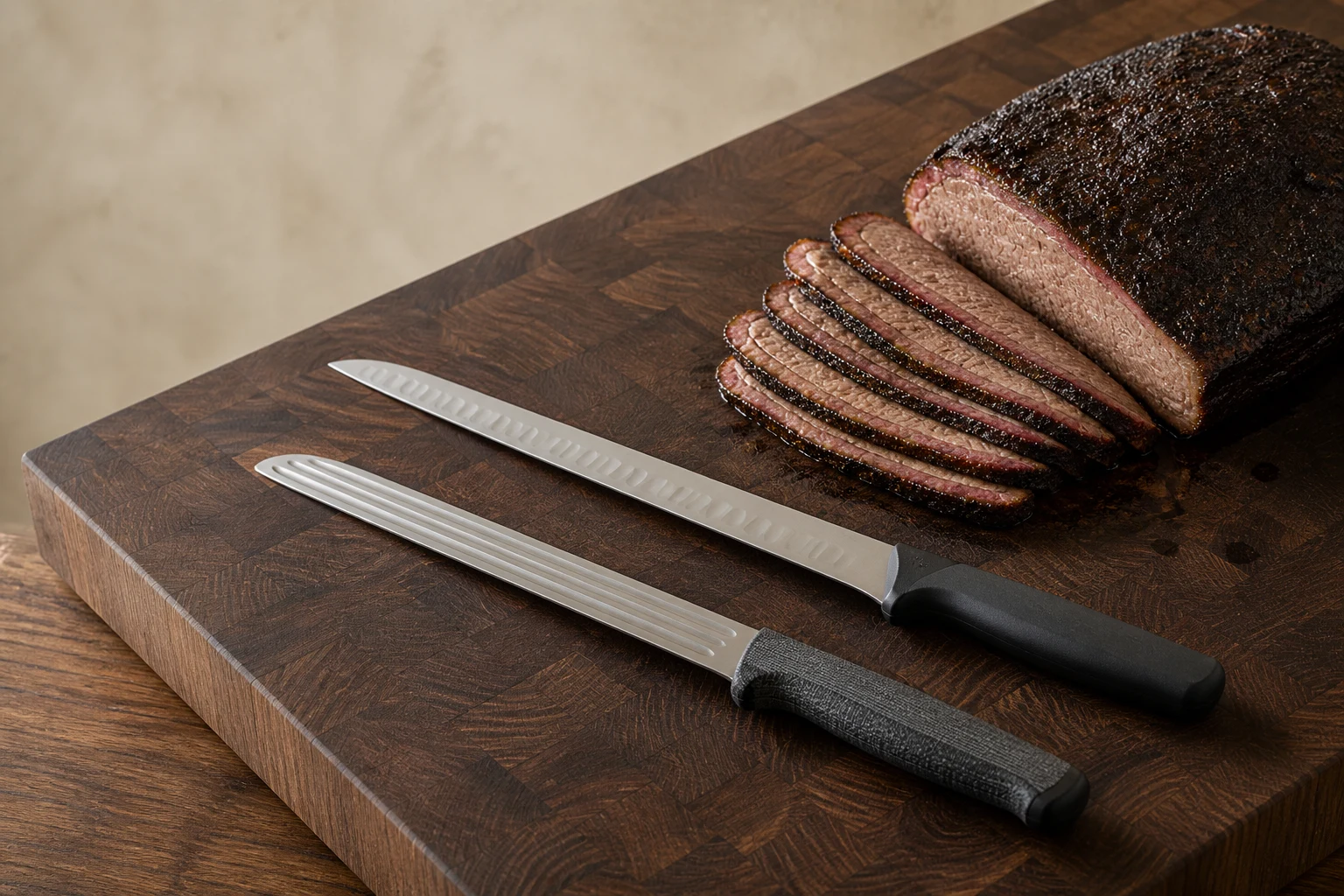
For brisket, the buying decisions shift from doneness to wrapping and carving: see the butcher paper comparison and brisket slicing knife guide. For live-fire handling, our grill tongs comparison focuses on reach, alignment and control instead of oversized accessory bundles.
Where This Guide Fits
This page supports the broader steak temperature guide. Use that pillar page for the complete cut family, buying framework and links to every closely related article.
Useful next reads include How Long Is Ground Beef Good in the Fridge?, how to cook steak, and Reverse Sear Steak for nearby cuts, methods and decisions.
Frequently Asked Questions
What is the best type of thermometer for steak?
A fast digital instant-read thermometer is the best first choice for most steaks. Add a leave-in probe for reverse searing, smoking and very thick cuts.
Can I leave an instant-read thermometer in the steak?
Usually no. Instant-read probes are designed for brief checks. Only leave a probe in the cooker when the manufacturer explicitly rates that model and cable for continuous cooking.
Where should I put the thermometer in a steak?
Insert from the side into the thickest central lean, away from bone, large fat seams and hot cookware. Move slightly to locate the coolest stable reading.
Is a wireless thermometer better for steak?
It is useful for thick steaks cooked slowly, but it is not automatically better for quick pan or direct-grill cooking. A fast instant-read thermometer remains valuable for final verification.
Has Just Great Steaks tested the Thermapen ONE?
Not yet. The current recommendation is based on published specifications, steak-use fit and independent 2026 testing. The guide does not claim first-hand comparative testing.
Sources & further reading
- ThermoWorks — Thermapen ONE Specifications — Manufacturer response time, accuracy range, IP rating and warranty
- ThermoWorks — ThermoPop 2 Specifications — Manufacturer response time, accuracy and warranty for the budget comparison
- TempPro — TP19H Instant-Read Thermometer — Manufacturer response time, accuracy, ingress protection and feature specifications
- Amazon — ThermoPro TP19H (ASIN B07XXSYLL8) — Exact marketplace product identity
- Amazon — Lavatools Javelin PRO Duo (ASIN B01F59K0KA) — Exact marketplace product identity and published product specifications
- Food Network — Best Meat Thermometers of 2026 — Independent steak, ice-water and boiling-water testing
- Consumer Reports — Meat Thermometer Buying Guide — Instant-read and leave-in thermometer use distinctions
- USDA FSIS — Food Thermometers — Probe use and food-safety context